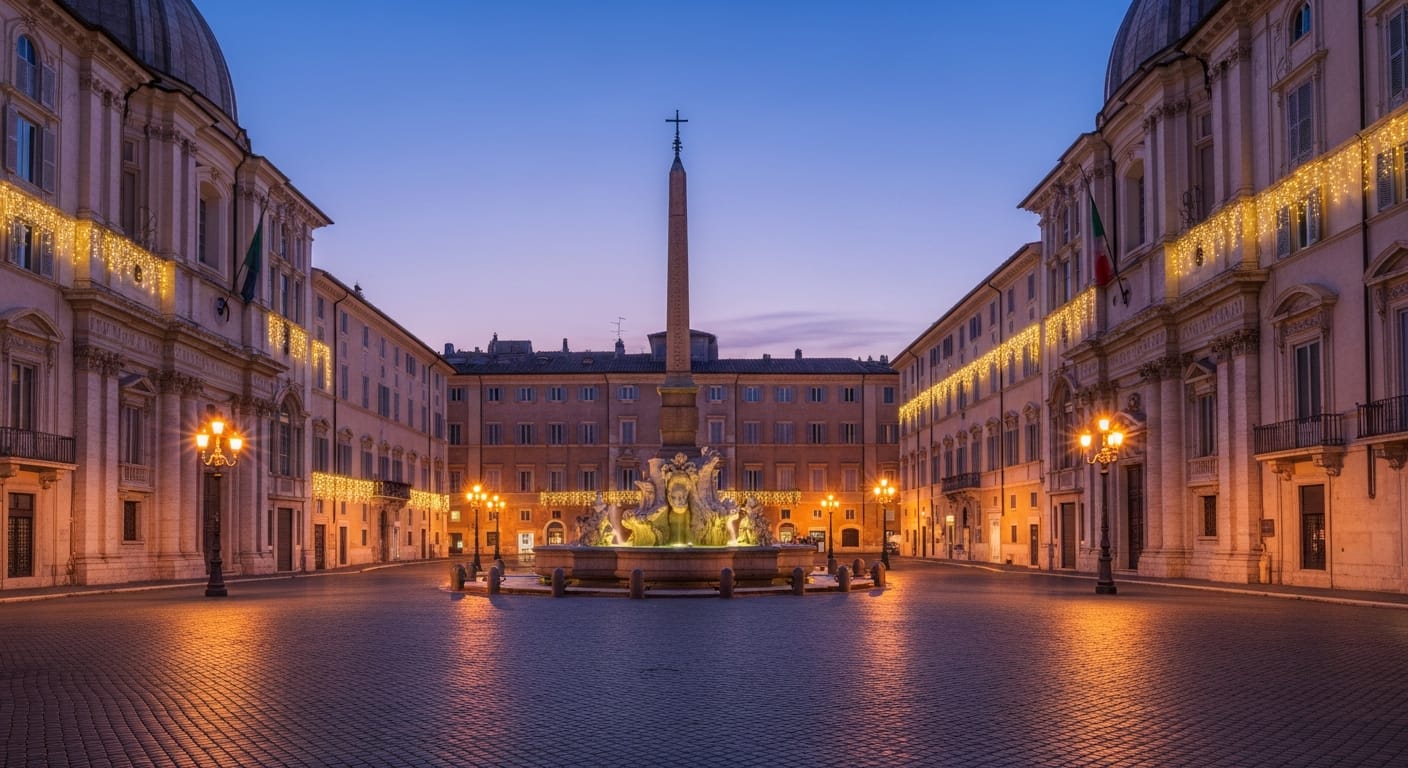
Rome's squares are central to the city's social and architectural fabric, each reflecting layers of history and distinct artistic styles. These open spaces serve as gathering points surrounded by fountains, statues, and churches that tell stories from the Roman Republic through the Baroque era.
What defines the character of Rome’s main squares?
Rome’s squares are defined by their historical significance and the artworks and monuments they showcase. For example, Piazza Navona is renowned for its Baroque fountains and the Church of Sant'Agnese in Agone, while Piazza del Popolo features twin churches and an ancient Egyptian obelisk. Many squares like Piazza Santa Maria in Trastevere blend lively local life with medieval and Renaissance architecture, offering a full sense of Rome’s layered past.
Which squares are best for appreciating Rome’s architecture and sculpture?
Piazza Navona and Piazza del Popolo stand out for their architectural grandeur and sculptural ensembles. Piazza Navona’s Fountain of the Four Rivers by Bernini is a highlight, while Piazza del Popolo’s Porta del Popolo and the twin churches of Santa Maria dei Miracoli and Santa Maria in Montesanto frame the space elegantly. You can also visit Piazza Mattei to see the charming Turtle Fountain, a smaller but captivating sculptural work.
When is the ideal time of day to visit these squares?
Early mornings and late afternoons provide the best light and fewer crowds for visiting Rome’s squares. Early hours allow you to appreciate the details of statues and facades without the hustle, while evenings bring a calm ambiance with illuminated fountains and buildings. Piazza Santa Maria in Trastevere is especially atmospheric in the evening when locals gather for dining and conversation.
Are there any squares closely linked to religious or papal history?
St Peter’s Square is the principal square connected to the Vatican and papal ceremonies. Its elliptical colonnades and the central obelisk create a monumental setting for religious events. For more on this, see All about St Peter's Square. Other squares like Piazza Navona also have churches with significant religious histories.
How accessible are these squares for walking tours?
Most of Rome’s famous squares are within walking distance of each other, making them ideal for a day of strolling. You can start at Piazza del Popolo, then walk down Via del Corso to Piazza Venezia, and continue to Piazza Navona and Piazza Santa Maria in Trastevere. This route covers diverse neighborhoods and historical periods, with plenty of cafes to rest along the way.
“Each square in Rome feels like stepping into a different chapter of the city’s story, where art, history, and daily life intersect naturally.”
—Livia Conti, Roman cultural guide
Helpful external resources
By visiting Rome’s squares, you gain insight into the city’s evolving architectural styles and cultural rhythms, making each stop a meaningful part of your journey through the Eternal City.