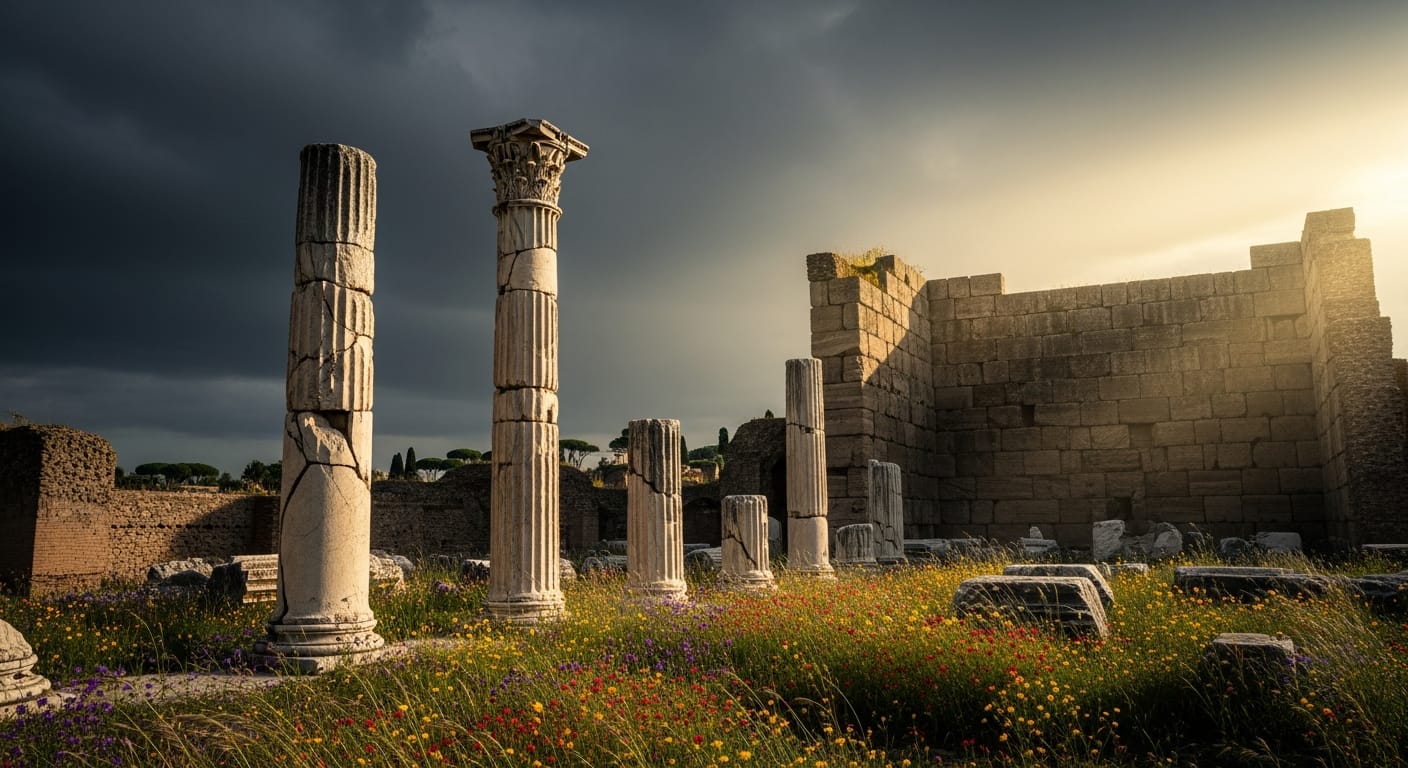
Rome's ancient ruins form a tangible connection to the city's millennia-old past, revealing layers of history through monumental structures and everyday remnants. These archaeological sites range from sprawling forums to vast baths, allowing you to trace the contours of Roman public life, politics, and leisure in their original settings.
What are the must-see ancient ruins in Rome?
The Roman Forum, Palatine Hill, and the Baths of Caracalla are among the top ancient ruins to visit in Rome. The Roman Forum, detailed in The Roman Forum: Where Stones Whisper Tales of Rome's Glory, features temples, basilicas, and marketplaces that once formed the heart of Roman public life. Nearby, Palatine Hill sits with views and ruins of imperial palaces. The Baths of Caracalla, covered in The Baths of Caracalla: A Glimpse into Ancient Roman Leisure, show the scale of Roman bathing complexes and social hubs.
How can I plan a half-day route to see key ruins?
You can plan a half-day walk starting from the Roman Forum and Palatine Hill, then proceed to the nearby Circus Maximus. Begin your visit using the advice in Roman Forum & Palatine Hill Tickets 2026: Prices, Combo Passes & Skip-the-Line Tips to book combined tickets and skip lines. After exploring the Forum’s ruins, walk down to Circus Maximus, whose chariot racing track is described in Circus Maximus Rome: the Iconic Ancient Chariot Racing Arena. This route covers major ruins within walking distance and fits a half-day schedule.
What do these ruins reveal about daily life in ancient Rome?
Sites like the Roman Forum and Baths of Caracalla provide insight into Roman politics, religion, and social customs. The Forum was the center for political debate and legal proceedings, while the Baths of Caracalla illustrate how Romans combined hygiene, exercise, and socializing. Visiting these ruins alongside the Parco degli Acquedotti in Rome can deepen your understanding of the infrastructure that supported city life, such as aqueducts that supplied water to public baths and fountains.
Are there combined tickets or passes to visit multiple ruins?
Yes, combined tickets that include the Roman Forum, Palatine Hill, and Colosseum are available and recommended. These passes, explained in Roman Forum & Palatine Hill Tickets 2026: Prices, Combo Passes & Skip-the-Line Tips, often include skip-the-line options to save time. Booking in advance helps you plan your visit efficiently, especially during peak seasons.
Is it possible to visit underground ruins like the catacombs alongside surface sites?
Yes, you can book separate tours to the catacombs, which complement the surface ruins by showing burial practices and early Christian history. The Rome Catacombs 2026: Best Tours, Tickets & How to Visit guide lists how to arrange visits to these subterranean sites. While catacombs are outside the central cluster of ruins, they add depth to your understanding of ancient Roman life and death.
"Walking through the Roman Forum, you don’t just see stones and columns—you sense the pulse of a civilization that shaped the world. Each ruin tells a story of everyday citizens, emperors, and the rhythms of ancient urban life."
—Livia Conti, Roman archaeologist
Helpful external resources
This page will help you plan your visit to Rome’s ancient ruins with practical tips and site details, ensuring you gain a clear sense of the city’s archaeological heritage and daily life in antiquity.